
Transcript
Announcer:
You’re listening to On the Frontlines of Pediatric Vaccines on ReachMD. Here’s your host, Ryan Quigley.
Mr. Quigley:
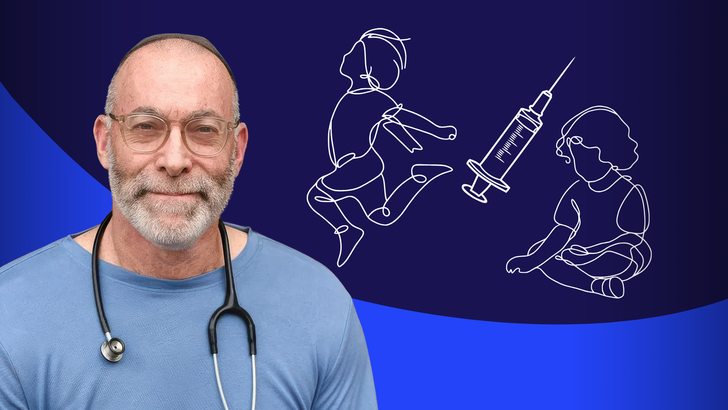
Welcome to On the Frontlines of Pediatric Vaccines on ReachMD. I'm Ryan Quigley, and joining me to discuss the importance of pediatric vaccination and strategies for talking to families about it is Dr. Michael Milobsky. He's the founder, owner, and practicing pediatrician at Pediatrics at the Meadows in Castle Rock, Colorado, as well as a large concierge practice called Chicken Soup.
Dr. Milobsky, thanks so much for being here today.
Dr. Milobsky:
Thanks for having me.
Mr. Quigley:
Absolutely. So, Dr. Milobsky, let's start with some big picture here. How do you typically frame the benefits of pediatric vaccination when discussing them with patients and families?
Dr. Milobsky:
I find it helpful to frame the discussion starting with statistics. So, as you know, we're seeing a rise in measles cases around the country. I think at last count—early April—there've been over 1,700 reported cases of measles, per the CDC. And I'll note that in recent years, since we've had a unified childhood vaccine schedule for the last 30 years, it's been estimated that we prevented over 500 million cases of disease and over a million deaths.
And when we think about diseases that we used to worry about—things like diphtheria, polio, and rubella that used to be common and sometimes deadly and crippling—they've decreased dramatically over the years because of the success of the child vaccine schedule. In fact, many of my patients have never even heard of some of these diseases.
So grounding the conversation in facts helps me reinforce that following the pediatric vaccine schedule plays an important role in protecting your children from potentially dangerous, vaccine-preventable disease.
Mr. Quigley:
Now, when families bring questions or concerns to you about vaccine safety, what do you typically tell them in that scenario?
Dr. Milobsky:
So I reassure parents that vaccines are one of the most extensively studied and evaluated parts of childhood medicine in our country, and that vaccines are extensively studied and continuously monitored for safety and efficacy.
I also tell them that, like any medicine or treatment, vaccines can have side effects. But for most healthy children, those side effects are mild. They're things like a fever, some body aches, fatigue, or some redness or soreness at the shot site. But for most healthy children, it's important for parents to know that the disease prevention benefits of vaccines far outweigh any potential side effect.
Mr. Quigley:
Yeah, it's a very important discussion to have. For those just tuning in, you're listening to On the Frontlines of Pediatric Vaccines on ReachMD. I'm Ryan Quigley, and I'm speaking with Dr. Michael Milobsky about how we can build trust with families around childhood vaccines.
So, Dr. Milobsky, with that in mind, how can clinicians help families prepare for pediatric visits to ensure more productive and efficient conversations around vaccination?
Dr. Milobsky:
I'd encourage parents to come prepared and use well-child visits as an opportunity for open and honest discussion about vaccines. There's plenty of online resources. I point my families mostly to the American Academy of Pediatrics website as an example, because of its extensive, accessible, family-friendly, and evidence-based information on this topic.
And for clinicians, it's less about what we can do to help parents prepare and more what we can do about help facilitate an honest, empathetic, and productive conversation. Many parents have questions about vaccines, and when they come, I think most pediatricians welcome the opportunity to answer questions and view it as a chance to build rapport and connection on a topic that's really confusing and scary for families.
Mr. Quigley:
Now, Dr. Milobsky, before we wrap here, what resources or tools do you recommend sharing with families to support informed decision-making when it comes to childhood vaccination?
Dr. Milobsky:
I mean, we all acknowledge that parents are going to use the online information that's available. I, once again, direct people specifically to the American Academy of Pediatrics because of the quality of information, but the amount of information online can be overwhelming and everyone acknowledges that.
So I always encourage families to start with having a direct conversation with your pediatrician. Parents consider their pediatric healthcare professional to be, really, their most trusted source of information when it comes to vaccines. And as a pediatrician myself, I know that we play a critical role in helping parents choose what's right for their child and make informed choices about childhood vaccines.
Mr. Quigley:
Thank you very much for that, and with those important takeaways in mind, I do want to thank my guest, Dr. Michael Milobsky, for joining me to discuss how we can help caregivers navigate childhood vaccination with confidence. Dr. Milobsky, it was great having you on the program. Thank you so much for doing this.
Dr. Milobsky:
Thanks for having me. It was a pleasure.
Announcer:
You’ve been listening to On the Frontlines of Pediatric Vaccines on ReachMD. To access this and other episodes in our series, visit On the Frontlines of Pediatric Vaccines on ReachMD.com, where you can Be Part of the Know
